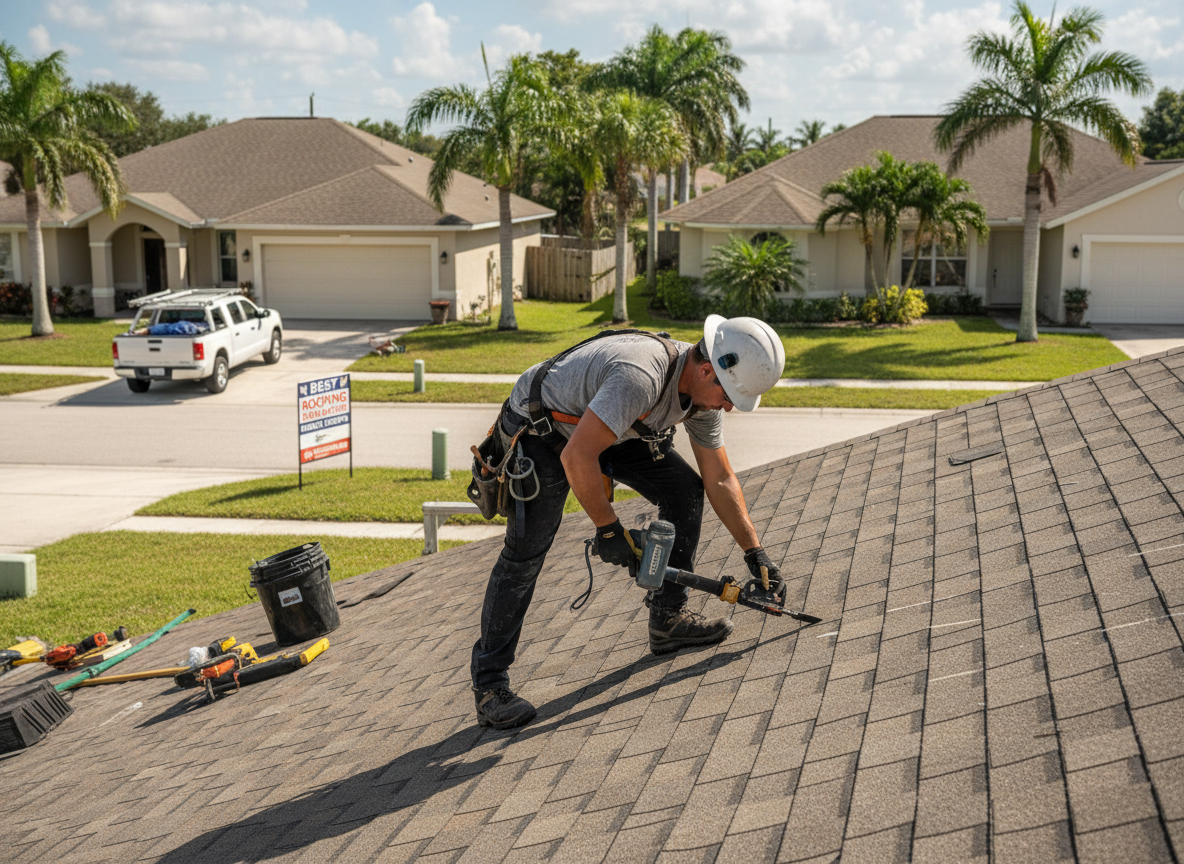
Tamarac homes built mostly from the 1970s through the 1990s often carry asphalt shingle or concrete tile roofs that now face repeated summer downpours and occasional tropical storms. Wind-driven rain finds its way under lifted shingles or cracked tiles, especially on south-facing slopes where afternoon heat accelerates material breakdown. Local crews know to check for deteriorated underlayment and rusted flashing around plumbing vents before any storm season arrives.
Broward County wind-load rules require upgraded fastening patterns and impact-rated materials on replacements. Crews working in Tamarac must verify existing decking condition because many original plywood sheets have softened from years of trapped moisture. Skipping a full deck inspection leads to callbacks when new shingles telegraph movement during the next heavy rain event.
Flat or low-slope sections on garages and room additions common in Woodmont and Kingswood neighborhoods collect standing water after prolonged rains. These areas need tapered insulation or modified bitumen membranes rather than standard shingles. Ignoring the slope change creates leaks that travel inside walls before homeowners notice ceiling stains.
Access in Tamarac often means working around mature oak canopies and narrow side yards, so material staging happens from the street with extra protection for driveways and landscaping. Crews also watch for older aluminum soffits that dent easily during tear-off, a detail that affects both schedule and final appearance.
Technician insight
In Tamarac, the thing that catches most people out with Best roofing contractor is how fast leaks travel through the original 1970s plywood decking once a few shingles lift during a summer thunderstorm; homes in The Woodlands and nearby sections often need deck sections replaced even when the surface looks fine from the street.
Post-storm leak in Tamarac
Heavy rain from a passing cell left water stains along a living-room ceiling in a 1982 Tamarac ranch. Inspection showed lifted shingles and saturated underlayment above a bathroom vent. Crew replaced the damaged deck section, installed new flashing, and restored the roof slope before the next forecast rain.
How it works
- 1
On-site inspection
Walk the full roof and attic to map damage, check decking, and note drainage issues typical after Tamarac storms.
- 2
Detailed scope and quote
List required materials, code upgrades, and any deck repairs so homeowners see exactly what moves the price.
- 3
Weather-timed tear-off
Remove old layers only when clear forecast windows exist, protecting interior spaces from sudden afternoon showers.
- 4
Installation and final walkthrough
Install new system with proper flashing and ventilation, then review every penetration and edge detail with the owner.
Pricing
Upfront written quotes after inspection; final price depends on roof size, layer count, and any deck repairs found.