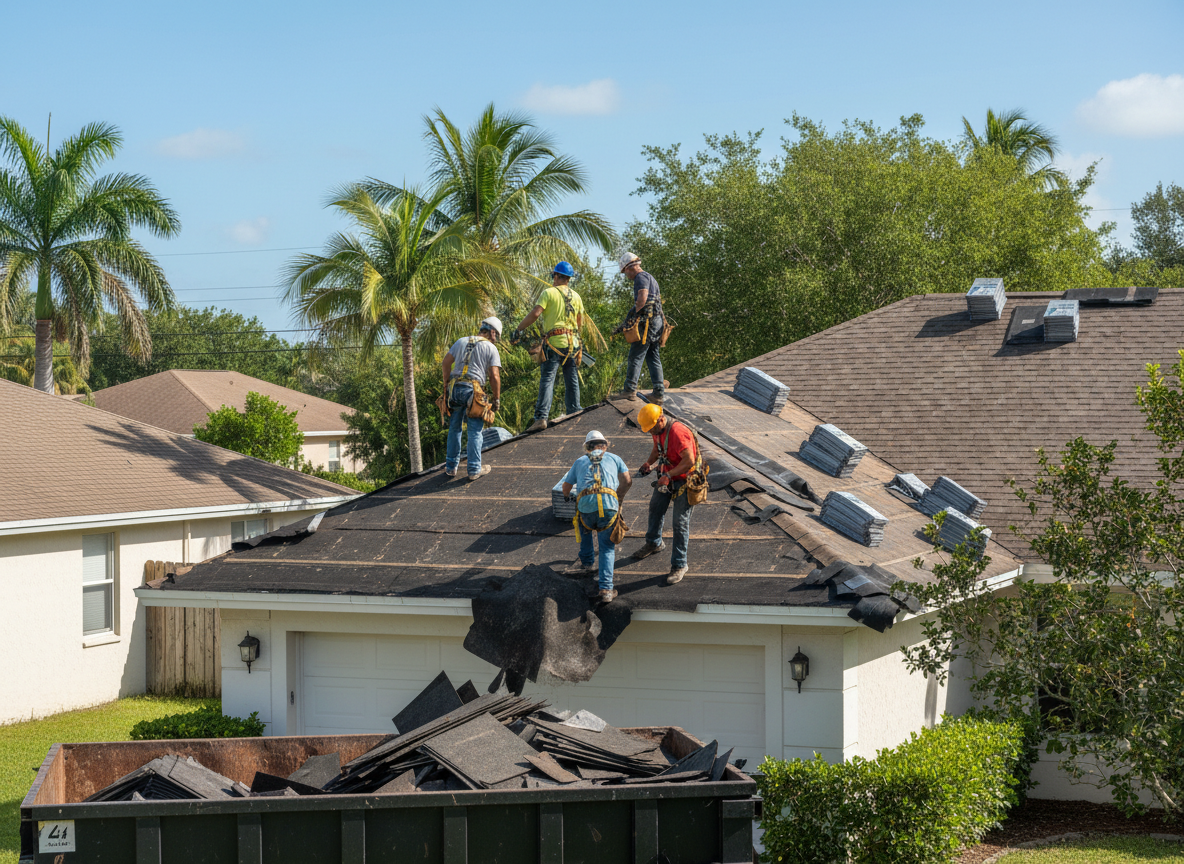
Tamarac homes built in the 1970s through 1990s often carry original asphalt shingle roofs that have endured decades of intense summer downpours and hurricane-force winds. When replacement becomes necessary, crews must first check for plywood decking rot caused by repeated moisture intrusion around vents and valleys. Broward County requires impact-rated materials on most re-roofs, so the job includes verifying existing nailing patterns and upgrading fasteners to meet current high-velocity hurricane zone standards before new underlayment goes down.
Flat or low-slope sections common on ranch-style homes in Woodmont and Kings Point demand extra attention to drainage. Standing water after storms accelerates membrane failure, so replacement crews install tapered insulation and new scuppers or drains to redirect flow toward the street. Working from the address at 6401 W Commercial Blvd allows quick response when afternoon thunderstorms interrupt work, letting teams secure the roof each evening before leaving the site.
Edge cases include tile roofs on some 1980s additions that must be removed without damaging the underlying structure. Crews photograph every layer during tear-off and note any termite damage or truss issues that Broward inspectors will flag. Proper disposal of old shingles follows county landfill rules, and new shingles are chosen for their algae resistance to handle the constant humidity that turns north-facing slopes green within two years.
Technician insight
In Tamarac, the thing that catches most people out with Roof Replacement is how many 1980s homes in the central neighborhoods still have the original felt underlayment that has turned to powder, so when you pull the shingles the deck looks fine until the first rain soaks through and you discover the rot that started at the valleys.
Woodmont Ranch Roof Replacement
Homeowner noticed leaks around the chimney after summer storms. Inspection showed widespread deck rot under the original shingles. Crew replaced damaged plywood, installed new impact shingles, and added extra step flashing at the chimney. Home passed final inspection with improved drainage at the rear scuppers.
How it works
- 1
Site Assessment
Measure the roof, inspect decking condition, and note drainage patterns while on site in Tamarac.
- 2
Material Selection
Choose impact-rated shingles or membrane that satisfy current Broward County wind codes for the address.
- 3
Tear-Off and Deck Repair
Remove existing layers, replace rotten plywood, and correct any low spots that trap water.
- 4
Installation and Final Walk
Install underlayment, flashing, and new roofing, then walk the finished roof with the homeowner to confirm drainage.
Pricing
Upfront quotes based on roof size, pitch, and chosen materials; no hidden fees after tear-off.