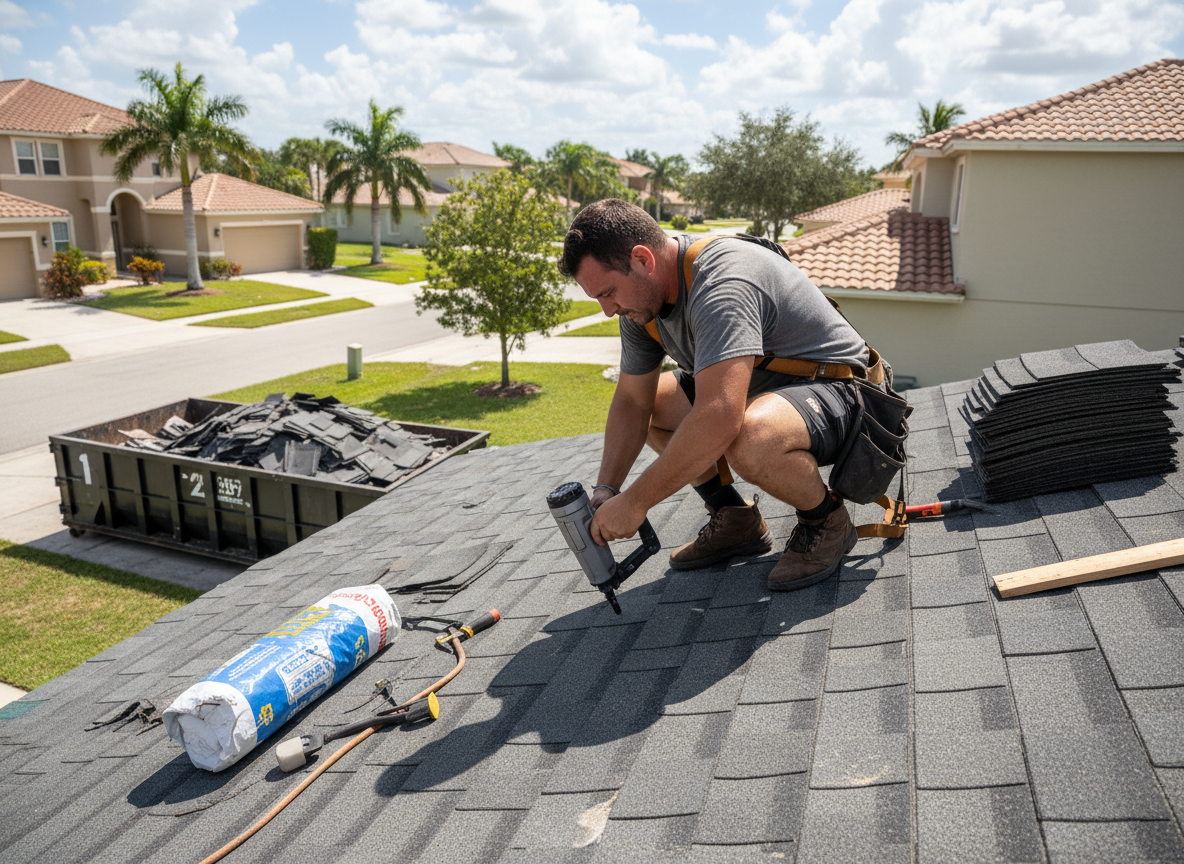
Tamarac homes built from the 1970s through the 1990s often carry original asphalt shingles or concrete tile that have endured decades of intense sun, sudden downpours, and hurricane-force winds common in Broward County. These roofs develop issues at the valleys, around skylights, and where newer solar panels have been added, allowing water to reach the decking before homeowners notice interior stains. Working from our base at 6401 W Commercial Blvd, we see how the flat terrain and proximity to the Everglades drainage system creates standing water on low-slope sections after heavy rain, accelerating granule loss and underlayment breakdown.
Hurricane season brings the biggest workload, with wind-driven rain pushing under flashing that was never upgraded to current Broward County high-velocity hurricane zone standards. We routinely replace rusted drip edge and re-secure ridge vents that pull loose during afternoon thunderstorms, tasks that differ from inland counties because salt air accelerates corrosion even ten miles from the coast. Homeowners in Woodmont, Mainlands, and the Kings Point area frequently call when ceiling drywall softens after a single storm cell passes through, rather than after a named hurricane.
When replacing a roof we always pull permits through the City of Tamarac and verify that new underlayment meets the 150 mph wind rating required in this zone. Older homes with vaulted ceilings require extra care to avoid disturbing insulation while lifting old tile, and we stage materials on driveways because many streets in the 33319 zip lack wide shoulders. These steps keep jobs moving even when afternoon storms interrupt work for an hour or two most summer days.
Technician insight
In Tamarac, the thing that catches most people out with Roofing contractor near me is how fast water gets under the old underlayment once the granules wash off the south-facing slopes. Homes here sit on flat ground with poor drainage, so even a short afternoon thunderstorm can push water sideways under lifted shingles before it shows up inside. Checking the valleys and step flashing around the chimney during every inspection prevents the callbacks we see most often.
Storm Leak in Woodmont
After a July thunderstorm, water appeared in a bedroom ceiling of a 1980s ranch in Woodmont. We found lifted shingles and deteriorated felt at the valley where two roof planes met. We replaced the underlayment, installed new step flashing, and restored the ceiling area without interior demolition.
How it works
- 1
Initial Site Visit
We arrive within hours, walk the roof from ladder points, and document every penetration and valley condition with photos for the homeowner.
- 2
Scope and Material Selection
We match the existing roof type to current code requirements and discuss shingle or tile options that perform best against Tamarac's frequent heavy rain.
- 3
Permit and Scheduling
We pull the required Tamarac permit, order materials, and set a start date that avoids the peak afternoon thunderstorm window when possible.
- 4
Installation and Final Inspection
Crews complete tear-off, deck inspection, and new roof installation, then schedule the city inspector for sign-off before final cleanup.
Pricing
Pricing varies by roof size, pitch, and whether tear-off is required; we provide written estimates after the site visit.