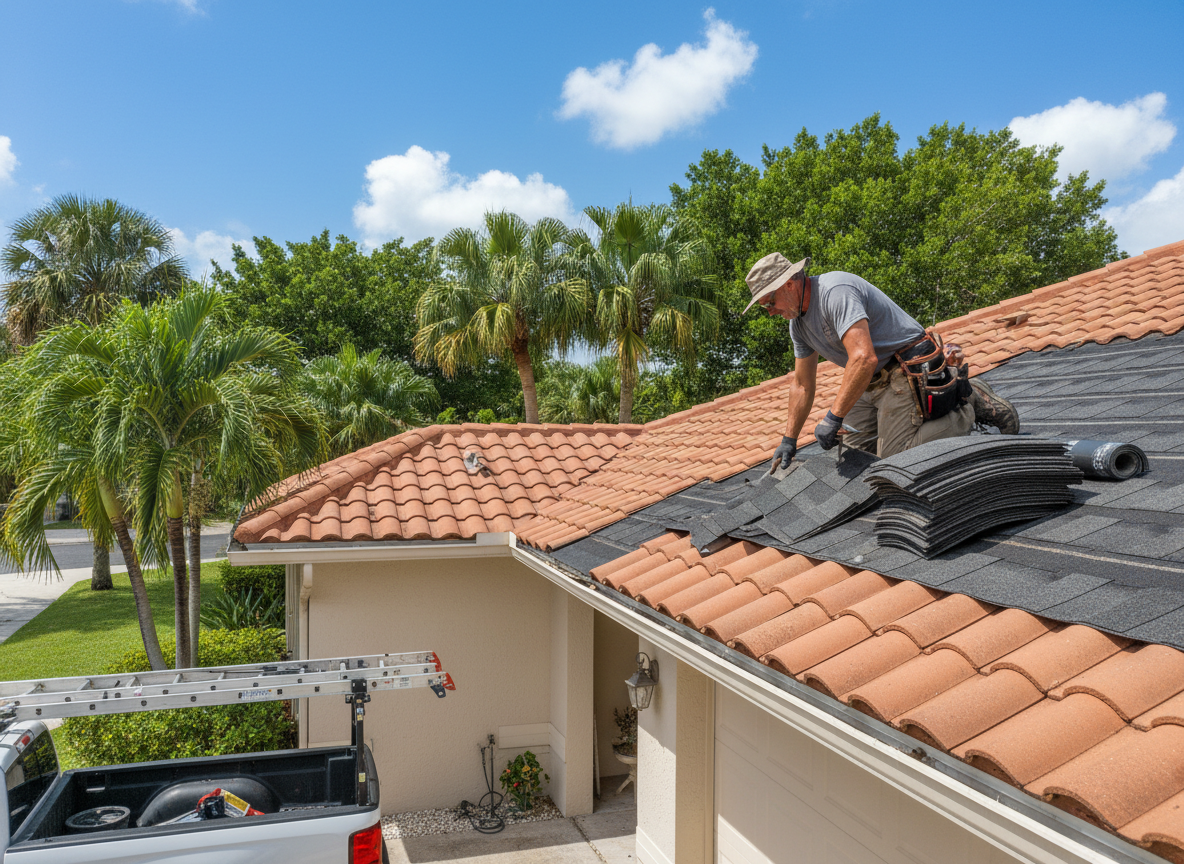
Tamarac homes built mostly in the 1970s and 1980s often have asphalt shingle or concrete tile roofs that suffer from UV degradation and repeated saturation during summer thunderstorms. Roof repair here frequently starts with locating active leaks around valleys, pipe boots, and ridge vents where wind-driven rain penetrates older flashing. Broward County requires permits for any structural deck work, so crews must document underlayment condition before patching to stay compliant with the current Florida Building Code wind-load standards.
Heavy afternoon downpours common in Tamarac can turn small granule loss into widespread water intrusion within a single season, especially on south-facing slopes. Technicians check for soft decking caused by trapped moisture between layers of felt and shingles, a problem that appears often in neighborhoods east of Commercial Boulevard. Proper repair means removing damaged sections, replacing rotted plywood where needed, and installing new drip edge and step flashing rather than simply coating over the issue.
Hurricane season brings additional risks from high winds that lift shingles at the eaves and corners. Repair work in Tamarac accounts for this by using ring-shank nails and six-inch exposure on replacement courses to meet local fastening schedules. Homeowners along streets near the Woodlands or near Pine Island Ridge frequently request targeted fixes after tropical storms rather than full replacements when the rest of the roof remains sound.
Technician insight
In Tamarac, the thing that catches most people out with roof repair is how quickly afternoon thunderstorms turn minor granule loss into deck rot on 1980s shingle roofs east of Commercial Boulevard. Homeowners often think a coating will buy time, but once water sits between layers the only fix is cutting back to solid wood.
Post-Storm Leak in Tamarac
A homeowner near the Woodlands reported water stains after a summer storm. Inspection showed lifted shingles and failed pipe boot flashing on the south slope. We removed three courses of shingles, replaced the rotted deck section, installed new step flashing and boots, and restored the roof surface. No further leaks appeared during the next rainy season.
How it works
- 1
Initial Inspection
Walk the roof and attic to map leaks, check deck integrity, and note flashing conditions around vents and skylights.
- 2
Scope and Quote
Document needed materials and labor, then provide an itemized quote before any work begins.
- 3
Repair Execution
Remove damaged sections, replace compromised decking, install new underlayment and shingles, and reseal all penetrations.
- 4
Final Walkthrough
Inspect completed work from both roof and interior, confirm no active leaks, and review maintenance recommendations.
Pricing
Upfront written quotes after inspection; price varies by roof pitch, extent of deck damage, and material type.