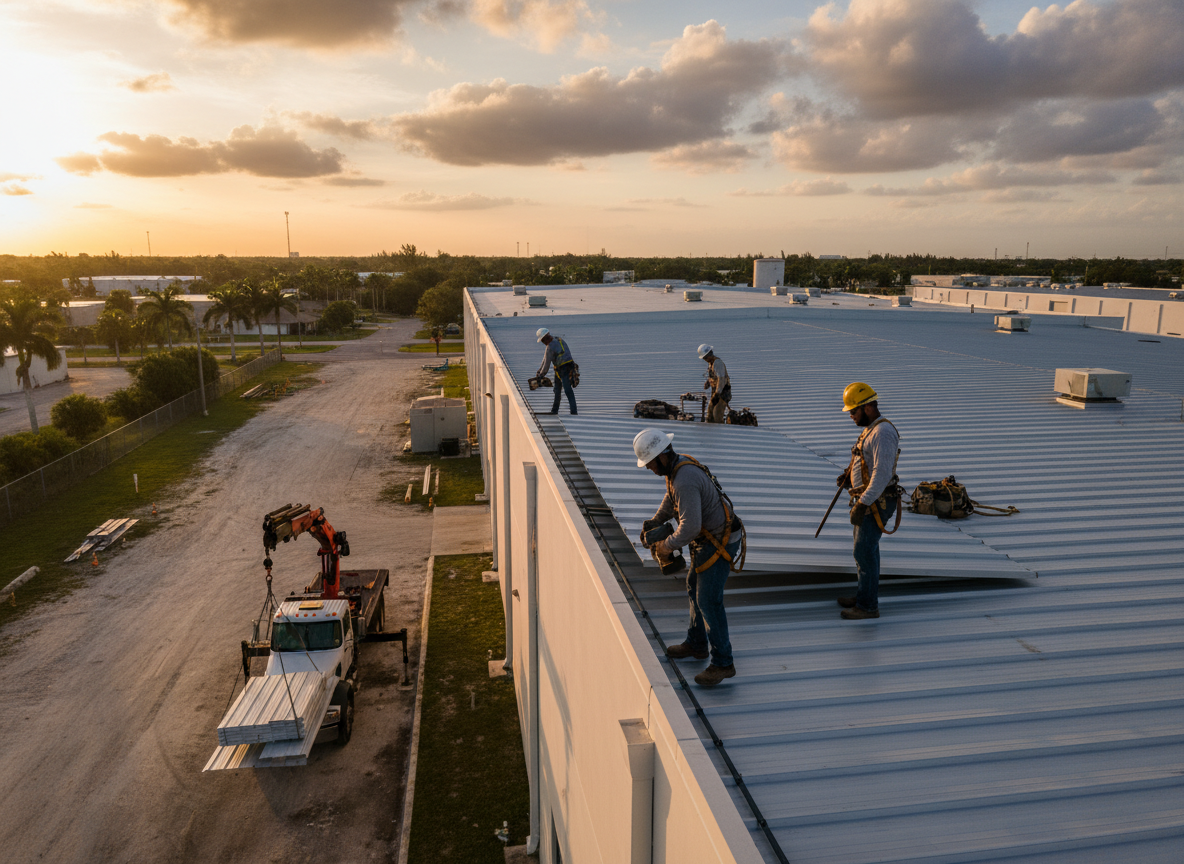
Industrial roofs in Tamarac face constant exposure to intense UV, driving rain, and hurricane-force winds that demand membranes with high wind uplift ratings. Many facilities along Commercial Boulevard and nearby industrial corridors were built in the 1970s and 1980s with mechanically attached metal decks that now show widespread fastener back-out and seam failure. Proper replacement requires removing existing ballast or old insulation, installing new cover boards, and using reinforced perimeter and corner zones per the current Florida Building Code. Skipping these steps leads to blow-offs during named storms.
Edge cases appear regularly on low-slope roofs over older manufacturing buildings where HVAC units were added without proper curbs or cricket details. Water ponds around these penetrations and accelerates membrane deterioration. We always verify existing deck attachment with pull tests before quoting, because many 1980s structures were never engineered for the wind loads now required in Broward County. When decking fails testing we coordinate with structural steel contractors rather than simply overlaying new material.
Heat and humidity also affect installation windows. Adhered systems must be applied when temperatures stay within manufacturer limits, which often restricts work to early morning hours during summer. We schedule around these constraints and use temporary tie-ins so production at the facility is never interrupted.
Technician insight
In Tamarac the thing that catches most people out with industrial roofing contractors is the 1980s metal decks along Commercial Boulevard that were never fastened for today's wind loads. Homeowners and facility managers assume an overlay will work until a storm rips the old fasteners loose and the new membrane goes with it.
Warehouse Roof Failure After Heavy Rains
A distribution warehouse near W Commercial Blvd reported repeated leaks around HVAC curbs after summer storms. We found ponding water and failed seams on the original EPDM. We removed the old membrane, added tapered insulation for drainage, installed a new reinforced TPO system with proper curb flashings, and the building stayed dry through the next hurricane season.
How it works
- 1
Site Assessment
We inspect the entire roof surface, test deck attachment, map all penetrations, and document existing drainage.
- 2
Wind Load and Code Review
We calculate required uplift ratings for the specific Tamarac location and confirm compliance with current Broward County amendments.
- 3
Material Selection
We recommend TPO, EPDM, or standing-seam metal based on building use, slope, and expected foot traffic.
- 4
Installation and Tie-In
Work proceeds in phases with temporary weather protection so operations continue uninterrupted.
- 5
Final Inspection and Documentation
We perform pull tests, infrared scans, and deliver as-built drawings plus warranty registration.
Pricing
Pricing depends on roof size, existing condition, chosen membrane, and any structural repairs needed; we provide detailed written estimates after inspection.