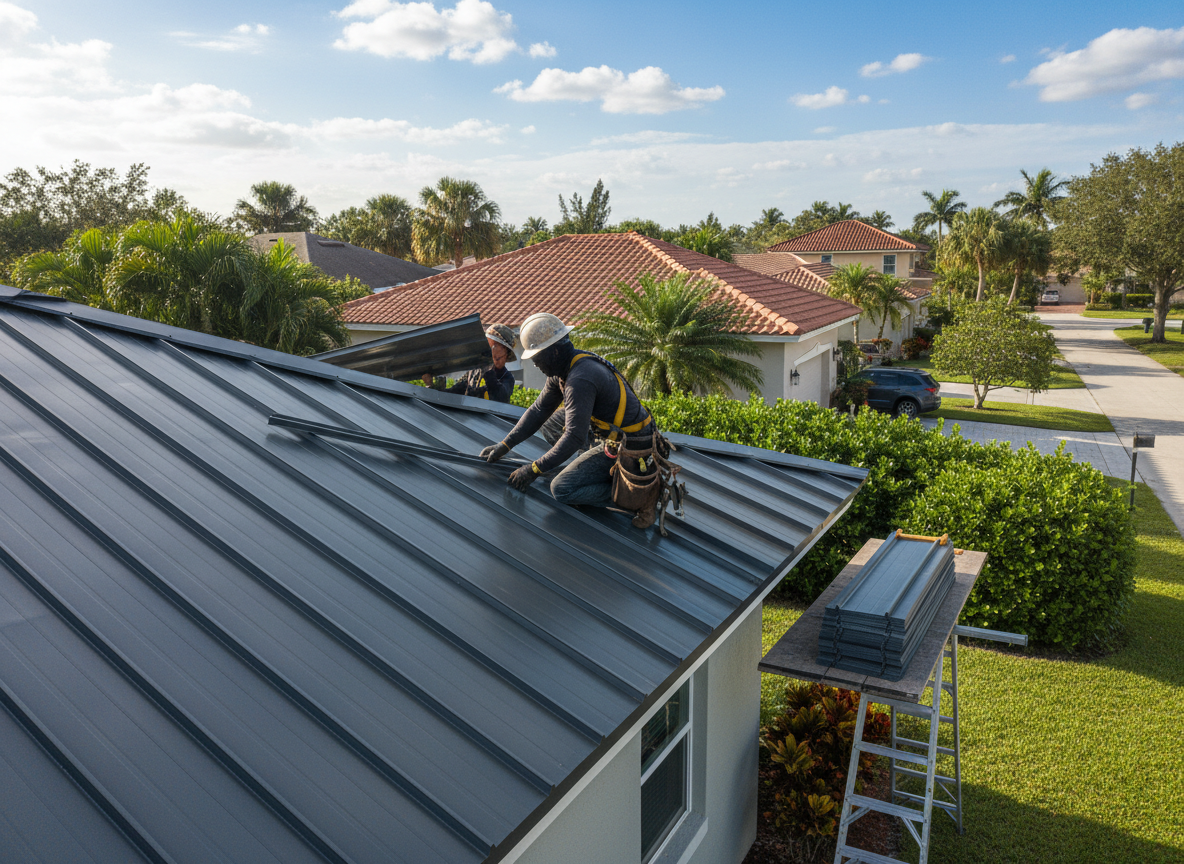
Metal roofs perform well in Tamarac because they reflect intense Florida sun and resist uplift from hurricane-force winds common in Broward County. Standing seam panels with concealed fasteners reduce leak points on homes built in the 1970s and 1980s, where original asphalt shingles often reach the end of their service life after repeated summer storms. Proper attachment to the existing wood deck requires checking for rot first, especially on properties near the canal system where humidity stays high year-round.
Installation starts with verifying the deck can accept new screws or clips without adding blocking. In older Tamarac neighborhoods, many roofs sit on 2x4 trusses spaced 24 inches, so installers often add strapping to meet current Florida Building Code wind-load requirements. Underlayment choices matter too: synthetic sheets hold up better than felt during the sudden downpours that hit the area each afternoon in wet season.
Edge details around skylights, vents, and valleys need extra flashing because wind-driven rain can push water under standard trim. Homeowners sometimes overlook how metal expands and contracts with daily temperature swings, so leaving proper gaps at ridges prevents buckling on south-facing slopes that bake all day.
Technician insight
In Tamarac, the thing that catches most people out with Metal roof installation is the condition of the 1970s-era decking on many single-story homes near Commercial Boulevard. The original plywood often needs blocking added before new screws will hold, or the panels can loosen after the first big storm.
Metal Roof Replacement After Storm Damage
A Tamarac homeowner called after leaks appeared following heavy summer rains. Inspection showed deteriorated decking around several vents on a 1982-built home. We reinforced the sheathing, installed a standing seam system with upgraded underlayment, and added extra strapping at the eaves. The roof has stayed dry through subsequent wet seasons.
How it works
- 1
Site Assessment
Measure the roof, check deck condition, and note existing penetrations on Tamarac homes.
- 2
Deck Preparation
Repair or reinforce sheathing and add strapping where needed for wind code compliance.
- 3
Underlayment and Panel Installation
Apply synthetic underlayment then fasten standing seam or screw-down panels with proper spacing.
- 4
Flashing and Trim
Install ridge caps, valley pans, and wall flashings to handle heavy rain.
- 5
Final Walk-Through
Inspect seams, fasteners, and drainage before leaving the job site.
Pricing
Cost depends on roof size, slope access, and whether deck repairs are required. Contact ZenithFixers for an on-site assessment.