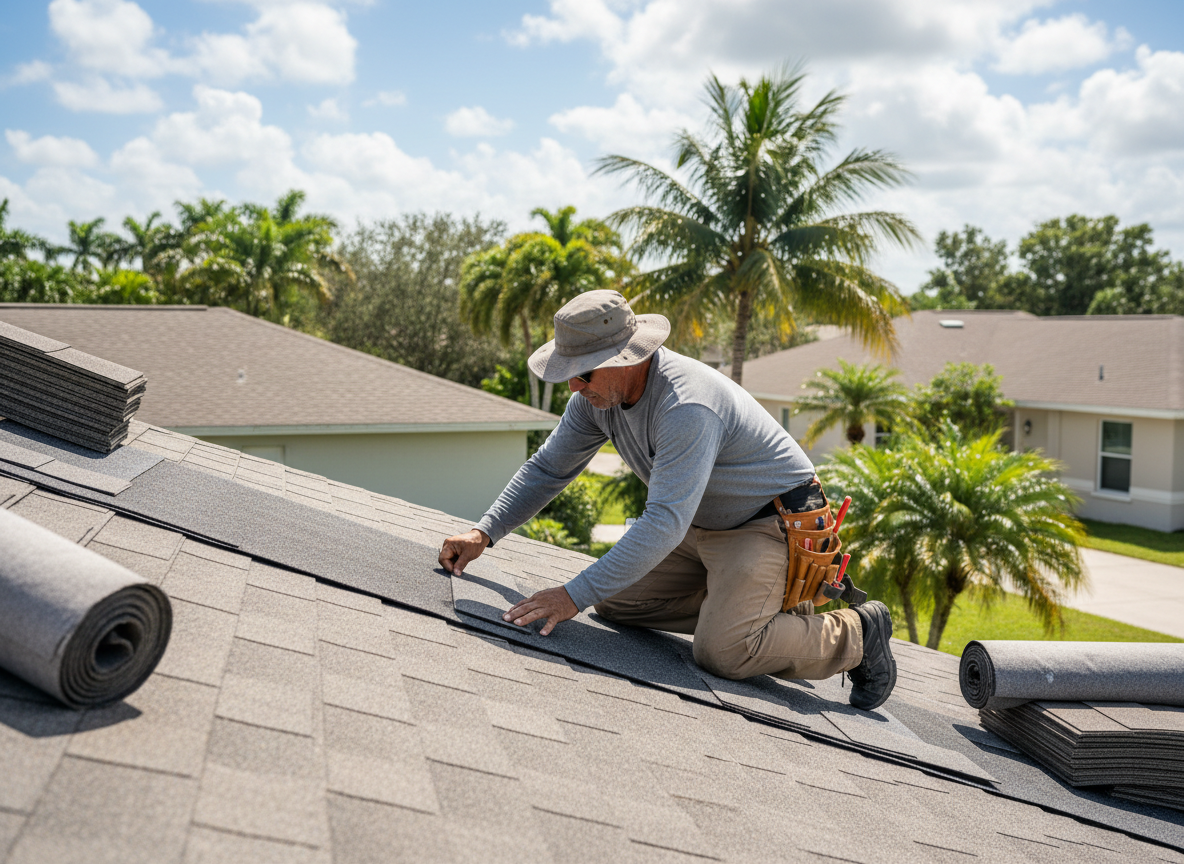
Tamarac homes built mostly from the 1970s through 1990s often carry original asphalt shingles or modified bitumen that degrade quickly under constant Florida sun and seasonal downpours. Roof covering work here starts with full tear-off when layers exceed code limits, followed by new underlayment rated for high-wind zones. Broward County requires permits and inspections for any covering change, and skipping proper flashing around skylights or vents leads to leaks that spread fast in humid air.
Edge cases appear regularly in neighborhoods near Woodmont and The Mainlands where tree cover holds moisture against the decking. We check for rotted plywood before installing synthetic underlayment or impact-rated shingles that meet current Florida Building Code wind-load standards. Homeowners sometimes attempt overlay installs to save time, but that traps heat and shortens the life of the new covering when summer temperatures spike.
Drainage matters on the flat or low-slope sections common on ranch-style houses in Tamarac. We slope modified bitumen or TPO membranes toward scuppers and add cricket details behind chimneys so water does not pond during afternoon thunderstorms. Proper ventilation with ridge vents prevents blistering that shows up after the first wet season if the original covering lacked airflow.
Technician insight
In Tamarac the thing that catches most people out with roof covering is how quickly ponding water on low-slope sections eats through older felt underlayment during our June-to-October rains, especially on 1980s homes near Commercial Boulevard where original decks have already seen two prior coverings.
Woodmont Roof Covering After Heavy Rains
A Tamarac homeowner noticed interior stains near a skylight after repeated summer storms. We found failed underlayment and rotted decking around the penetration. We removed the old covering, replaced damaged plywood, installed new synthetic underlayment and impact shingles with upgraded flashing. The leaks stopped and the roof now handles afternoon downpours without ponding.
How it works
- 1
Site Assessment
We measure the roof, note existing layers, check deck condition, and review Broward permit requirements before any work begins.
- 2
Material Selection
Homeowners choose from impact shingles, synthetic slate, or membrane systems matched to the home's pitch and exposure on Tamarac streets.
- 3
Tear-Off and Prep
Old covering is removed down to the deck, damaged wood replaced, and new underlayment installed with sealed seams.
- 4
Installation and Final Walk
New covering goes on with manufacturer-specified fasteners, all penetrations flashed, then we walk the roof with the owner to confirm drainage.
Pricing
Upfront quotes after on-site inspection account for roof size, pitch, and chosen covering material.