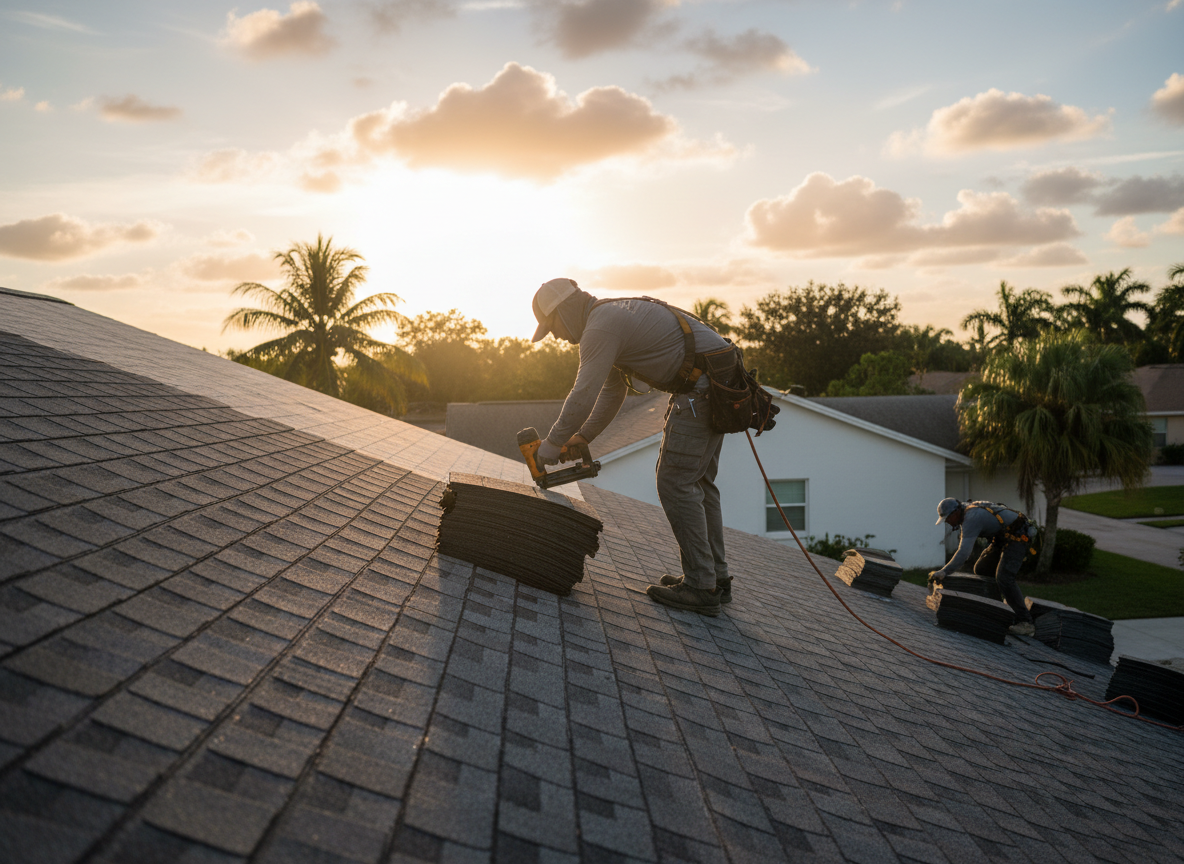
Tamarac neighborhoods such as Woodlands and Mainlands feature many single-family homes built in the 1970s and 1980s with original asphalt or concrete tile roofs that now face repeated hurricane-season wind events and intense UV exposure. Roofing installers must select underlayment and fasteners rated for high-velocity hurricane zones under the current Florida Building Code, particularly when replacing decks that have softened from decades of moisture cycling. Edge cases arise around skylight curbs and chimney flashings where improper sealing leads to interior leaks during afternoon thunderstorms common in Broward County.
Before any new roof goes on, crews check for rotted fascia and inadequate attic ventilation that trap humidity in Tamarac’s subtropical climate, accelerating shingle granule loss. Metal drip edge must extend properly at eaves to direct water away from stucco walls prevalent on local ranch-style homes. Installers also verify that existing ridge vents meet updated wind-driven rain standards so homeowners avoid callbacks after summer downpours.
When working near the 6401 W Commercial Blvd shop, crews often encounter properties backing onto canals where soil movement stresses roof planes differently than inland lots. This requires additional step flashing at valleys and careful torque on tile clips to prevent uplift. Homeowners frequently overlook the need for new pipe boots and vent boots during full replacement, which later become the first failure points once temperatures climb again.
Seasonal Considerations
Installations scheduled outside peak hurricane season allow better curing times for adhesives and sealants used on tile and modified-bitumen systems common in the area.
Technician insight
In Tamarac, the thing that catches most people out with roofing installers is skipping the extra hurricane clips on pre-2002 homes in neighborhoods like Woodmont or Tamarac Lakes; those older decks flex under summer storm winds and the original nails pull right out if you don’t add the straps while the roof is open.
Tile Roof Replacement After Leak
A homeowner in the Mainlands section noticed water stains after repeated heavy rains. Inspection showed failed underlayment and loose tiles on a 1980s roof. We removed the old system, replaced damaged sheathing, installed new synthetic underlayment and impact tiles with proper clips, then added upgraded ridge ventilation. The roof has remained dry through subsequent storm seasons.
How it works
- 1
Site Assessment
Measure roof planes, check deck condition, and note existing ventilation and flashing details on Tamarac homes.
- 2
Material Selection
Choose impact-rated shingles or tiles, synthetic underlayment, and code-compliant fasteners for local wind zones.
- 3
Deck Preparation
Remove old roofing, replace damaged sheathing, and install drip edge plus ice-and-water shield at eaves and valleys.
- 4
Installation
Apply underlayment, flash all penetrations, and secure new roofing per manufacturer and Florida Building Code requirements.
- 5
Final Walk-Through
Inspect seams, fasteners, and ventilation; provide homeowner with maintenance guidance for the new system.
Pricing
Pricing varies by square footage, material choice, roof complexity, and any deck repairs needed; we provide detailed written estimates after inspection.