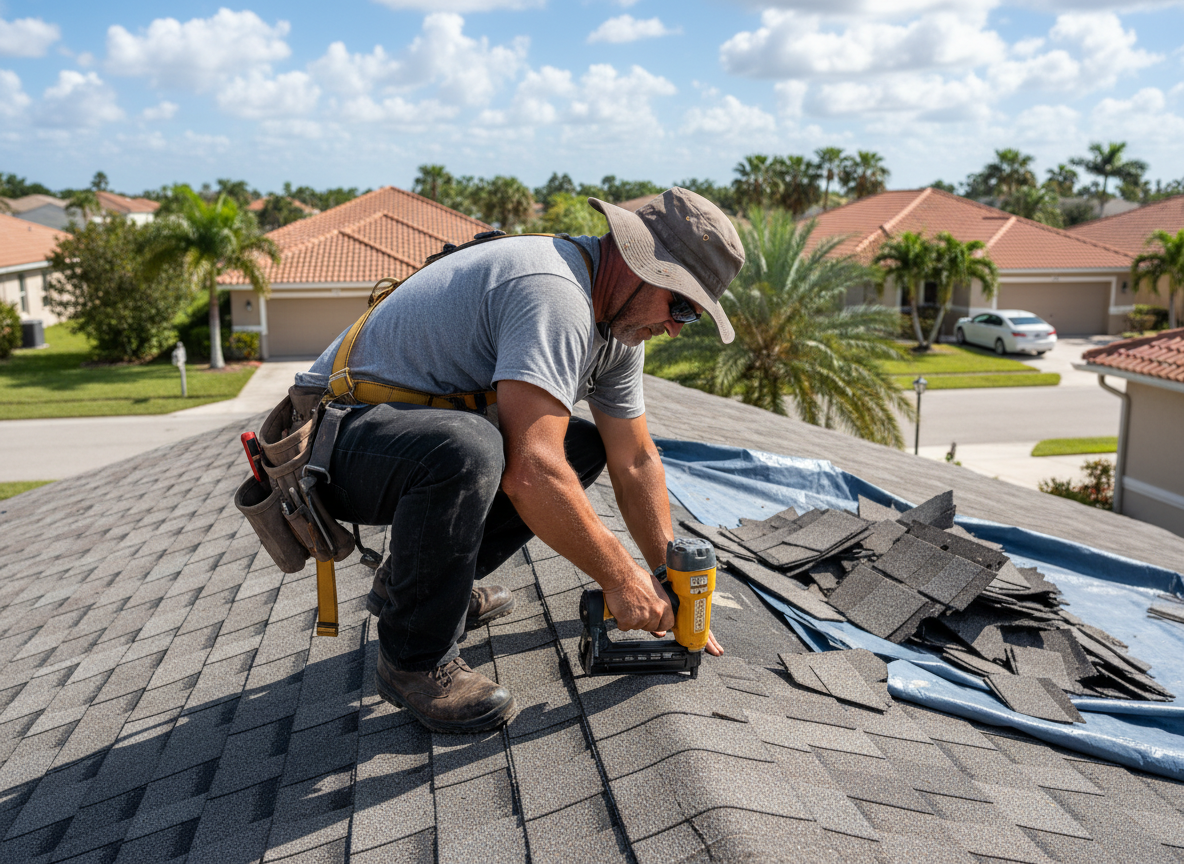
Tamarac homes, many constructed between the late 1970s and early 1990s in neighborhoods such as Woodlands and Tamarac Lakes, typically carry concrete tile or asphalt shingle roofs installed to meet early Broward County wind-load standards. Over decades these roofs face repeated thermal expansion, UV degradation, and the weight of accumulated pine needles from surrounding tree cover. A roofing specialist starts by checking underlayment integrity and hurricane clip attachment points rather than simply replacing visible tiles, because loose clips allow wind-driven rain to reach the deck during afternoon thunderstorms that peak from June through October.
Flat sections over garages or room additions often develop ponding near scuppers when original slopes were set too shallow for the volume of rain Tamarac receives in a single cell. Specialists remove saturated insulation, re-slope with tapered polyiso, and install new modified-bitumen or TPO membranes that meet current Florida Building Code requirements for uplift resistance. Edge cases include stucco parapets that crack at the roof-wall transition; these must be addressed with backer rod and elastomeric sealant before the new membrane is installed or moisture will migrate into exterior walls during the wet season.
When replacing an entire roof, crews verify that existing truss plates and rafter ties still meet the 130 mph wind zone now required in Broward County. Older homes in the Mainlands of Tamarac often have 2x4 trusses that need sistering or additional bracing before new underlayment and tiles can be loaded. Skipping this step leads to visible ridge waviness after the first named storm passes through the area.
Technician insight
In Tamarac, the thing that catches most people out with roofing specialist work is the hidden condition of the plywood deck under 1980s tile roofs. Once you strip the old underlayment you often find delamination along the drip edge from years of pine needle mulch holding moisture against the fascia. That forces an extra day of deck replacement before you can even start the new system.
Tile Roof Leak Near Woodlands
Homeowner noticed water stains on the master ceiling after a July thunderstorm. Inspection showed cracked tiles and missing clips along the east valley where runoff concentrates. Crew replaced the underlayment in that section, added new clips, and reinstalled matching tiles. No further leaks appeared during the remainder of hurricane season.
How it works
- 1
On-Site Assessment
Technician inspects decking, underlayment, flashing, and attachment points from both attic and exterior, noting any prior repairs common in Tamarac roofs.
- 2
Code and Material Review
Review current Broward County permit requirements and select tile profile or shingle weight that matches the home's original wind rating.
- 3
Detailed Scope and Schedule
Provide written scope covering tear-off, underlayment upgrade, ventilation correction, and daily cleanup standards before work begins.
- 4
Installation and Final Walk
Complete work with daily debris removal, final leak test at valleys and penetrations, and walkthrough with homeowner.
Pricing
Cost depends on roof size, pitch, and whether deck repairs are needed; most Tamarac projects are quoted after inspection.