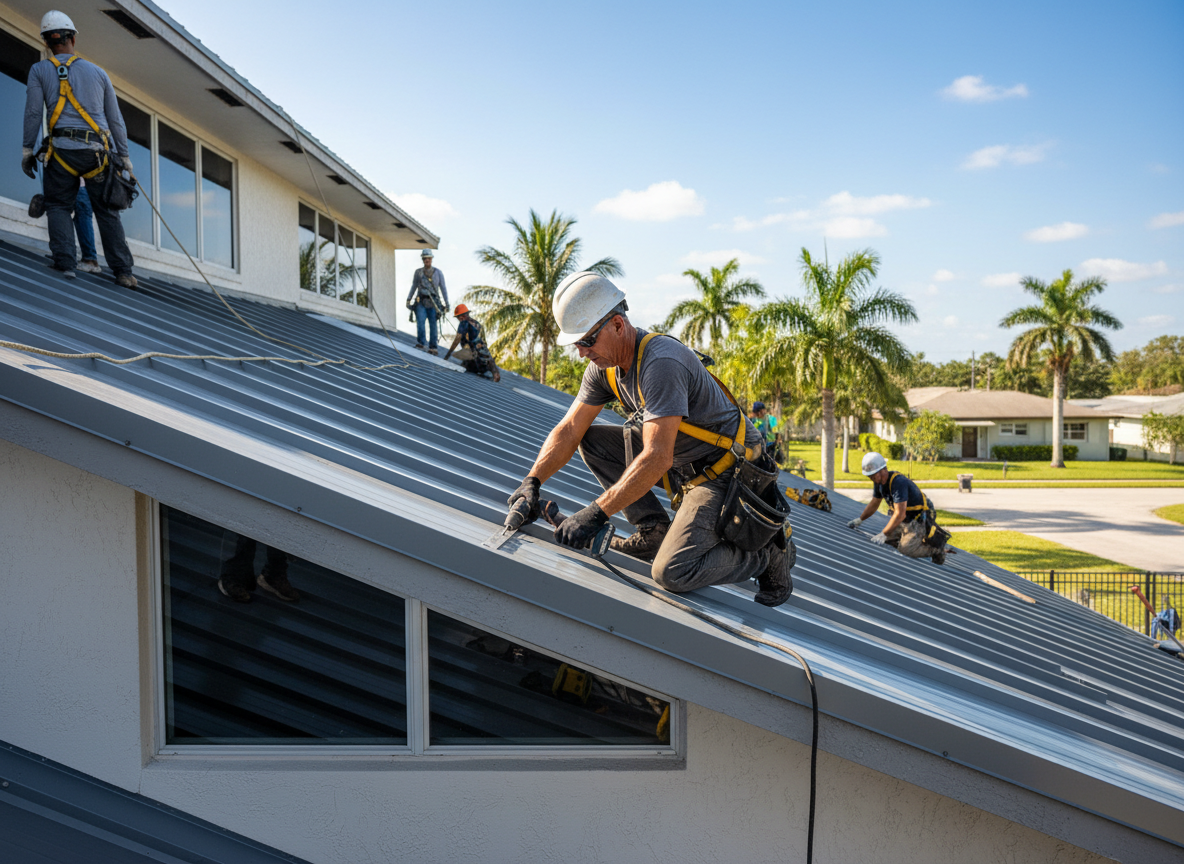
Steel roofing stands up well in Tamarac because it handles the intense summer thunderstorms and hurricane-season winds that hit Broward County every year. Homeowners in neighborhoods like Mainlands and Woodmont often choose steel over asphalt shingles when replacing roofs on 1970s and 1980s concrete-block houses that sit on flat lots with poor drainage. Proper underlayment and sealed seams prevent water intrusion during the wet season when daily downpours are common.
Installation crews must account for the high humidity that speeds corrosion on uncoated panels and the thermal expansion that occurs when steel heats up under Florida sun. In Tamarac, crews frequently work around existing tile or shingle layers on low-pitch roofs and secure panels to meet current Broward County high-velocity hurricane zone fastening schedules. Skipping the correct closure strips or ridge vents leads to leaks at valleys and penetrations within the first heavy rain.
Edge cases include homes near the C-14 canal where occasional flooding requires extra flashing at the eaves and gable ends. Steel panels also need to clear roof-mounted HVAC units and satellite dishes without creating new leak points. Crews inspect for rotted wood decking caused by prior leaks before any new steel goes down, since many Tamarac roofs have been patched multiple times over the decades.
Technician insight
In Tamarac, the thing that catches most people out with steel roofing contractors is skipping the right coating on homes built in the 1970s around Woodmont and Mainlands. The constant humidity and occasional canal flooding eat through basic galvanized steel in just a few seasons if you don't use a proper galvalume or painted finish.
Steel Roof Replacement After Leaks
A homeowner in Tamarac's Mainlands section reported water stains after several summer storms. Inspection showed corroded seams on the existing metal roof and rotted decking at two valleys. We replaced the roof with coated steel panels, added new flashings around the HVAC curbs, and secured everything to current wind code. The house stayed dry through the next wet season.
How it works
- 1
Site Assessment
Measure the roof, check decking condition, and note existing penetrations on Tamarac homes.
- 2
Material Selection
Choose gauge, coating, and color suited to local humidity and wind-load requirements.
- 3
Panel Fabrication and Delivery
Order custom-length panels and schedule delivery to avoid street parking issues in tight neighborhoods.
- 4
Installation and Sealing
Install with proper fasteners, closures, and flashings, then perform a final water test.
Pricing
Pricing varies by roof size, pitch, gauge, and any decking repairs needed; upfront quotes provided after inspection.